
From Walking to Hiking: Taking the Next Step
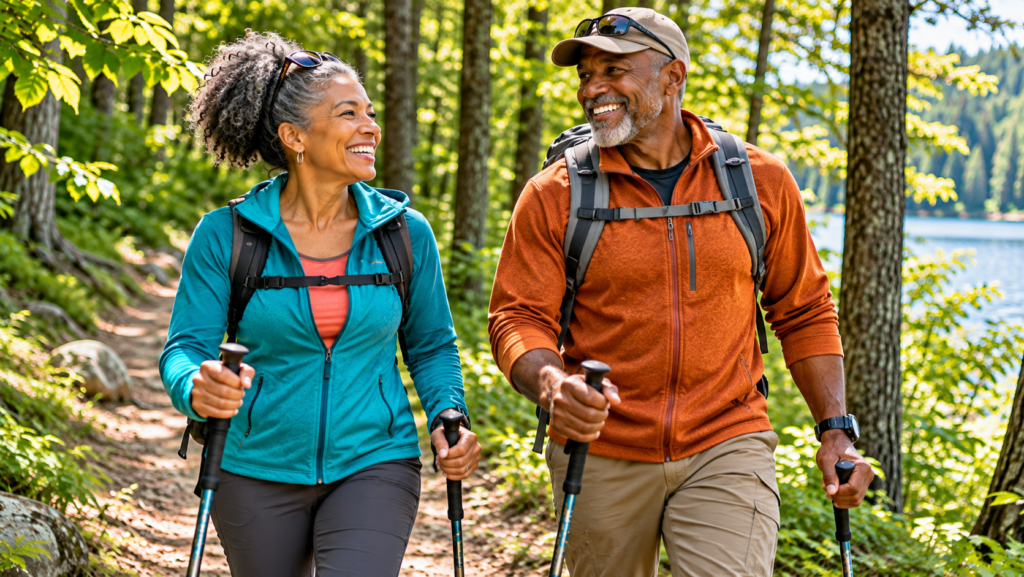
So, you’ve been walking around your neighborhood, enjoying the local park, and maybe even adding a little distance each week. You’re feeling pretty good about it.
Then one day, you notice a trail disappearing into the trees and wonder, “Where does that go?”
Well, that little bit of curiosity might be the beginning of your next adventure!
The good news is that making the transition from walking to hiking doesn’t require climbing a mountain, buying expensive equipment, or suddenly becoming an outdoor survival expert.
In fact, hiking is really just walking with a little more adventure thrown in.
What’s the Difference Between Walking and Hiking?
Not as much as you might think.
Walking usually takes place on sidewalks, paved paths, or relatively smooth surfaces. Hiking often means exploring natural trails with dirt, rocks, roots, hills, and uneven ground.
But not every hiking trail is difficult. Many state parks, nature preserves, and local recreation areas offer easy trails that are perfect for beginners.
The trick is choosing a trail that matches your current abilities, not the abilities you hope to have six months from now.
Choosing Your First Trail
For your first hike, keep things simple.
Look for a well-maintained trail that’s relatively flat and approximately one to two miles long, or shorter if that better matches your walking routine.
A loop trail is a great option because it brings you back to where you started without retracing your steps.
Pay attention to the trail’s distance, elevation changes, and difficulty rating. A two-mile trail with steep hills can be much more challenging than a three-mile walk through a city park.
Apps like AllTrails can help you discover nearby trails, read reviews, and get an idea of what to expect before heading out.
And remember, there’s nothing wrong with turning around early. The trail will still be there another day.
Do You Need Hiking Boots?
Probably not for your first easy hike.
A comfortable pair of walking shoes or trail shoes with good traction may be all you need for a short, dry, well-maintained trail.
As you begin exploring rocky, muddy, or more challenging terrain, you might want to consider hiking boots designed for additional traction and protection.
Don’t let a shopping list keep you from getting started.
Comfort and safety matter much more than having the latest outdoor gear.
What Should You Bring?
You don’t need a giant backpack for a short nature hike.
A small daypack or waist pack can carry the basics: water, a snack, your phone, sunscreen, and any personal medications you might need.
Check the weather before leaving, and consider carrying a light jacket if conditions might change.
It’s also a good idea to tell someone where you’re going and when you expect to return.
Download or save your route before leaving, since cell service isn’t always available on trails.
A little preparation goes a long way toward making your first hike enjoyable.
Slow Down and Enjoy the Experience
Here’s something wonderful about hiking: you don’t have to hurry.
Stop to look at an interesting tree. Watch the birds. Take a photograph. Sit on a bench or a rock and enjoy the view.
Unlike a workout where you’re watching the clock, hiking gives you an opportunity to appreciate the world around you.
Watch your footing, especially around rocks, roots, and loose gravel. If you use trekking poles, they can provide additional stability on uneven surfaces.
And if you’re hiking with someone who walks faster, don’t feel pressured to keep up.
This is your adventure, too.
Your First Hiking Challenge
Find an easy nature trail near home and plan a short outing.
Choose a comfortable distance, check the conditions, bring water, and give yourself plenty of time.
You don’t have to reach a mountain summit or hike ten miles to call yourself a hiker.
If you step off the sidewalk, explore a nature trail, and enjoy the experience, you’ve taken the next step.
Who knows? That simple walk through the woods might eventually lead to state parks, national parks, and places you’ve always wanted to visit.
And it all started with a little curiosity.
Where to Next?
Coming Next: Hiking After 50 — A Beginner’s Guide
We’ll explore trail difficulty ratings, essential hiking equipment, staying safe outdoors, and building confidence for longer adventures.
One foot in front of the other. Baby steps count, too!